Executive Summary
As the clamshell foldable market continues to mature in the 2026 lifecycle, the architectural divide between form-factor optimization and raw hardware throughput has never been clearer. This teardown pits the Motorola Razr (2024)—a device that prioritizes external display utility and environmental resilience (IPX8)—against the OPPO Find N3 Flip, a powerhouse that leverages flagship-grade silicon (Dimensity 9200) and a bespoke Hasselblad triple-camera array. Rather than comparing generic aesthetics, our analysis focuses on thermal management, SoC binning, optics arrays, and UFS read/write protocols to determine which foldable delivers the superior technical value-for-money.
Individual Teardowns
Motorola Razr (2024)
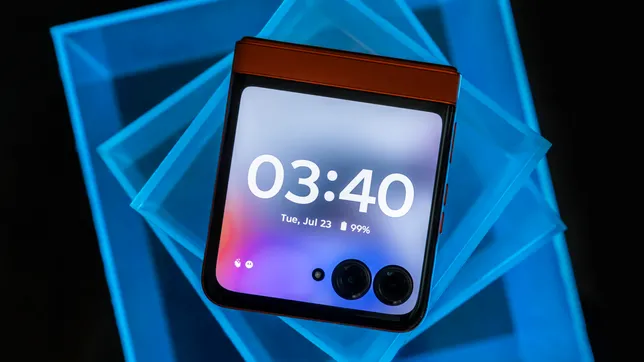
The Motorola Razr (2024) represents a masterclass in footprint optimization. The hallmark of its architecture is the 3.6-inch pOLED cover display pushing a 90Hz refresh rate at 1056 x 1066 resolution, allowing for nearly full application execution without unfolding the chassis. Under the hood, Motorola opted for the 4nm MediaTek Dimensity 7300X. While this SoC yields lower benchmark aggregates compared to flagship silicon, it operates efficiently within the strict thermal envelope of a folding chassis. Paired with a 4,200 mAh dual-cell battery, it sustains moderate workloads effectively. Notably, the chassis is certified with an IPX8 water resistance rating, featuring a redesigned teardrop hinge that minimizes the display crease to under 0.15mm depth.
OPPO Find N3 Flip
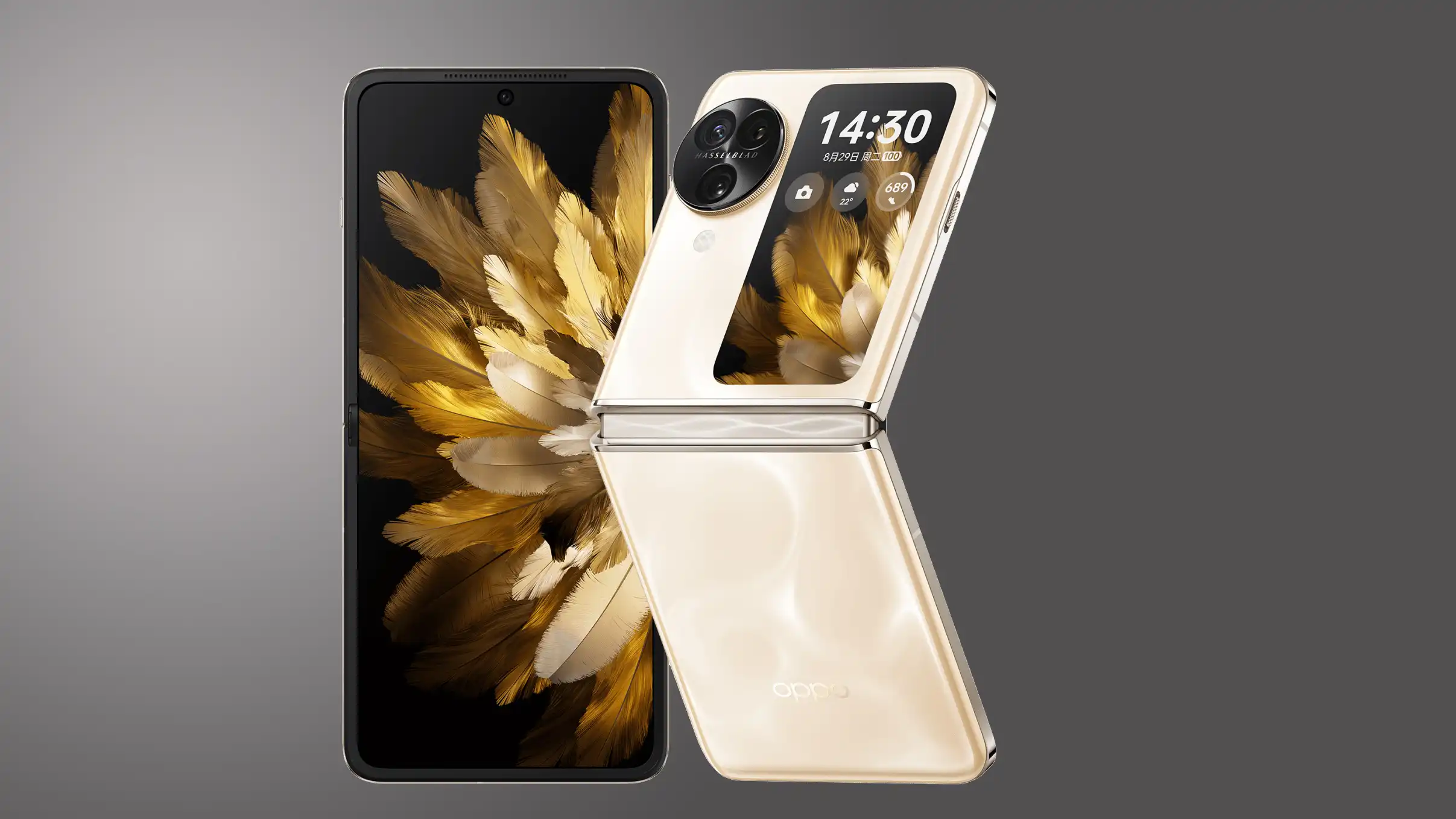
OPPO’s Find N3 Flip takes a distinctly performance-heavy approach to the clamshell form factor. It integrates the flagship MediaTek Dimensity 9200 chipset, mated to ultra-fast UFS 4.0 storage and LPDDR5X RAM, yielding memory bandwidths that eclipse the Razr’s UFS 2.2 modules. The camera architecture is unparalleled in this segment: it houses a primary 50MP Sony IMX890 sensor with OIS, a 48MP ultrawide, and uniquely, a 32MP telephoto lens with 2x optical zoom for portraiture. The trade-off for this optical hardware is an IPX4 splash-resistance rating (inferior to Motorola’s IPX8) and a vertically-oriented 3.26-inch cover screen (382 x 720 resolution) that relies on specific widget optimizations rather than raw app mirroring. Power delivery peaks at 44W wired via SuperVOOC architecture, outpacing Motorola’s charging throughput.
Technical Comparison Table
| Specification | Motorola Razr (2024) | OPPO Find N3 Flip |
|---|---|---|
| Primary Display | 6.9-inch pOLED, 120Hz, 3000 nits peak | 6.8-inch LTPO AMOLED, 120Hz, 1600 nits peak |
| Cover Display | 3.6-inch pOLED, 90Hz, 1056 x 1066 pixels | 3.26-inch AMOLED, 60Hz, 382 x 720 pixels |
| Processor (SoC) | MediaTek Dimensity 7300X (4nm) | MediaTek Dimensity 9200 (4nm) |
| RAM & Storage Protocol | 8GB LPDDR4X | 256GB UFS 2.2 | 12GB LPDDR5X | 256GB/512GB UFS 4.0 |
| Rear Camera Architecture | 50MP Main (OIS) + 13MP Ultrawide | 50MP Main (OIS) + 48MP UW + 32MP Telephoto (2x) |
| Battery & Charging | 4200 mAh | 30W Wired, 15W Wireless | 4300 mAh | 44W Wired, No Wireless |
| Durability (IP Rating) | IPX8 (Submersion resistant) | IPX4 (Splash resistant) |
| Price / Purchase | Buy Now on Amazon | Buy Now on Amazon |
Key Differentiators
1. SoC and Memory Throughput
The OPPO Find N3 Flip dominates in raw compute. The Dimensity 9200 leverages ARM Cortex-X3 prime cores, whereas the Razr’s Dimensity 7300X utilizes older architecture focused on mid-range efficiency. Furthermore, OPPO’s implementation of UFS 4.0 storage yields read/write speeds that are roughly double that of Motorola’s UFS 2.2, resulting in drastically reduced app load times and faster 4K video rendering.
2. Cover Display Utility
Motorola claims a clear victory in external UI flexibility. At 3.6 inches and a higher pixel density, the Razr’s cover display wraps around the camera modules and permits full, unhindered app execution. OPPO’s 3.26-inch vertical screen is highly functional but restricted largely to curated mini-apps and specific widgets, limiting true one-handed multitasking.
3. Optical Arrays
For imaging, OPPO engineered a true flagship system into a foldable chassis. The inclusion of a 32MP dedicated telephoto lens allows for geometrically accurate 50mm-equivalent portraiture. The Razr relies purely on digital crop from its primary 50MP sensor for zoomed shots, resulting in artifacting and reduced micron light collection in low-light environments.
The Verdict
From a strict data and specification standpoint, the OPPO Find N3 Flip offers superior hardware value for power users and photography enthusiasts, thanks to its Dimensity 9200 silicon, UFS 4.0 storage speeds, and Hasselblad-tuned triple-lens array. However, the Motorola Razr (2024) is the technically superior device for standard, daily utility. Its IPX8 water resistance, inclusion of wireless charging, and far superior exterior display API make it a more seamless, durable foldable. If your priority is raw processing and optics, choose OPPO. If your priority is software fluidity, external screen utility, and environmental durability, the Razr is the definitive choice.