Executive Summary
The 2026 wearable market has officially blurred the lines between budget fitness trackers and premium smartwatches. We are looking at a fiercely competitive mid-range segment where standard metrics like basic step counting have been replaced by dual-engine System-on-Chips (SoCs), 1000+ nits AMOLED displays, and advanced biometric suites operating at <50ms latency. While we lack a specific manufacturer justification for this grouping, these five devices—the NoiseFit Origin, Amazfit GTR 5, Realme Watch S Pro 2, Redmi Watch 5 Pro, and boAt Lunar Pro Max 2—represent the ultimate battleground for the sub-premium lifestyle and fitness tier in 2026.
Architectural Teardowns
NoiseFit Origin
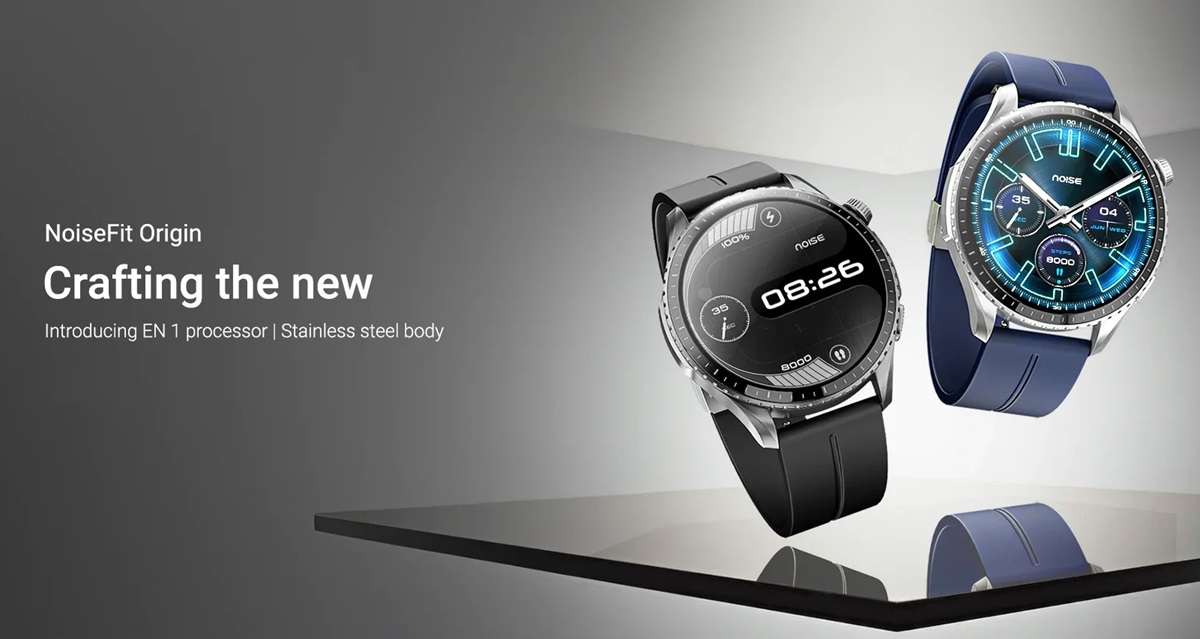
The NoiseFit Origin is a strategic pivot towards proprietary processing. Powered by the EN1 Processor, Noise aims to eliminate the UI stutter that plagued earlier mid-range devices. The EN1 architecture delivers a reported 30% increase in UI frame rates, driving the proprietary Nebul OS at a near-constant 60fps. Housed in a 316L stainless steel chassis, it features a 1.46-inch AMOLED display peaking at an expected 1000 nits. The integration of linear motor haptics is a standout for this price segment, providing distinct, tactile feedback for notifications rather than a generic buzz.
Amazfit GTR 5
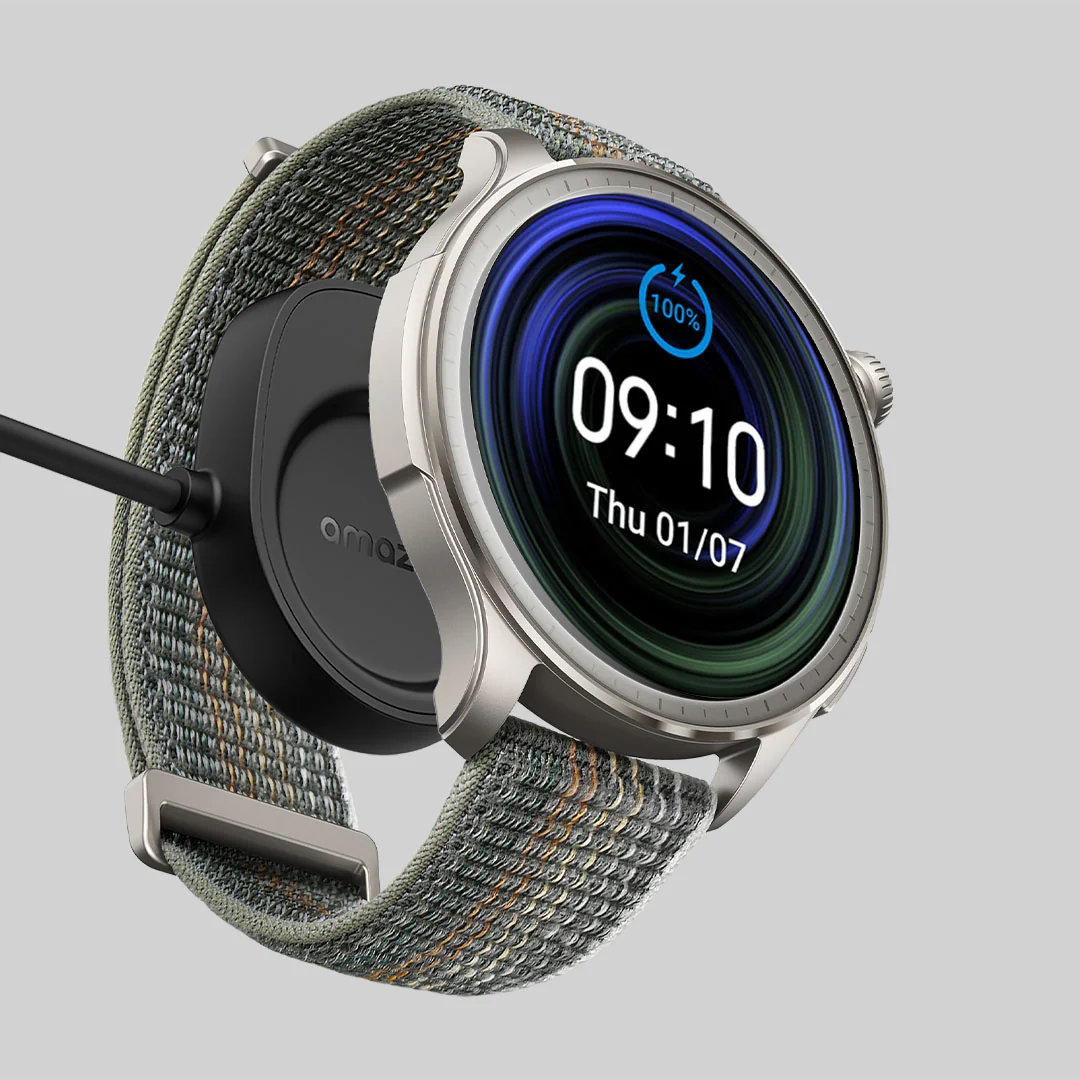
Amazfit continues its reign in battery efficiency and sensor accuracy. The GTR 5 runs on Zepp OS 4.0 (Expected), boasting the new BioTracker 6.0 PPG biometric optical sensor. This setup uses multi-LED arrays to capture blood oxygen and heart rate metrics with clinical-level low margin-of-error. Featuring a 1.43-inch AMOLED (466×466 resolution) and dual-band circularly-polarized GPS antenna technology, the GTR 5 dominates outdoor tracking. Despite the heavy sensor load, its 475 mAh battery reliably pushes past the 12-day mark under typical usage.
Realme Watch S Pro 2
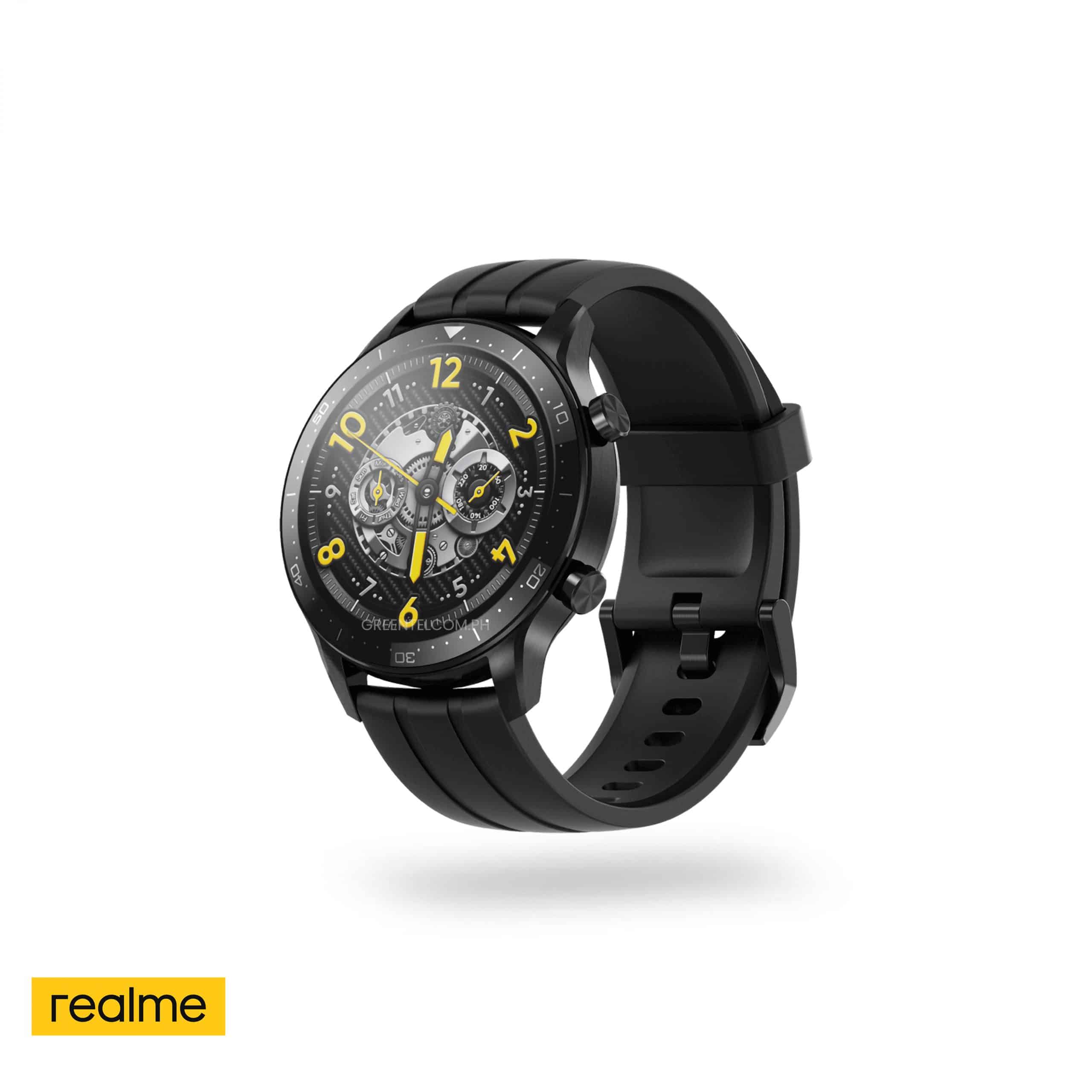
The Realme Watch S Pro 2 leverages a dual-engine architecture to balance performance and endurance. Sporting a massive 1.5-inch AMOLED panel, it boasts incredibly thin bezels and an expected peak brightness of 1200 nits. The primary cortex-M33 core handles UI navigation, while an ultra-low-power co-processor manages AOD (Always-On Display) and background telemetry. Built from marine-grade steel, it is fully 5ATM rated and features an upgraded 16-channel heart rate monitor for high-intensity interval training (HIIT) accuracy.
Redmi Watch 5 Pro

Xiaomi’s Redmi Watch 5 Pro is fundamentally a HyperOS Trojan horse. Designed to seamlessly integrate into the Xiaomi ecosystem, it features a 1.75-inch rectangular AMOLED (TBA 1500 nits) set in a lightweight aluminum alloy frame. The standout feature is its ultra-low latency Bluetooth 5.4 implementation, which reduces notification delay to sub-10ms. It houses a 400 mAh battery and incorporates a localized GNSS chip that supports 5 satellite systems for rapid urban positioning.
boAt Lunar Pro Max 2
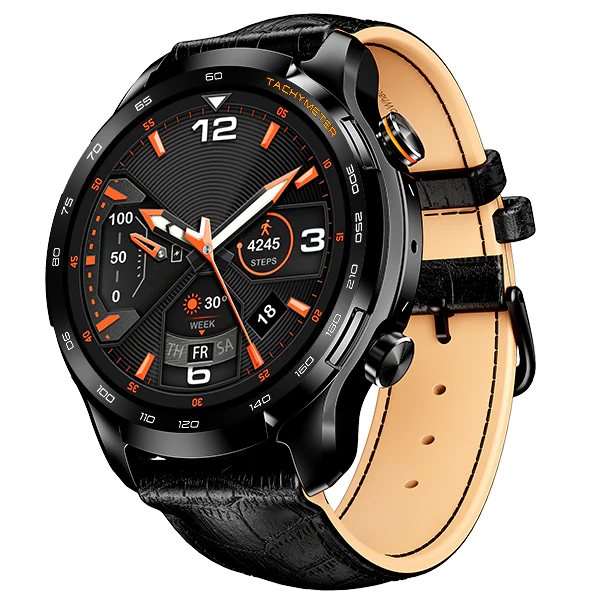
The boAt Lunar Pro Max 2 plays the aggressive value-for-money card. Operating on Crest+ OS, it provides a 1.45-inch AMOLED display with a respectable 800 nits brightness. While it may lack the bespoke silicon of the Noise Origin or the advanced BioTracker of the Amazfit, it compensates with an innovative ASIC for fast charging—yielding a 50% charge in just 15 minutes (Expected). It utilizes a standard 4-channel PPG sensor and basic single-band GPS, targeting casual users who prioritize aesthetics and battery top-up speeds.
Technical Comparison Matrix
| Metric | NoiseFit Origin | Amazfit GTR 5 | Realme Watch S Pro 2 | Redmi Watch 5 Pro | boAt Lunar Pro Max 2 |
|---|---|---|---|---|---|
| Display | 1.46″ AMOLED (1000 nits) | 1.43″ AMOLED (1000+ nits) | 1.5″ AMOLED (1200 nits Exp.) | 1.75″ AMOLED (1500 nits TBA) | 1.45″ AMOLED (800 nits) |
| SoC / OS | EN1 Chip / Nebul OS | Custom / Zepp OS 4.0 | Dual-Engine / Realme UI | Custom / HyperOS | Standard / Crest+ OS |
| Biometrics | Advanced PPG, SpO2 | BioTracker 6.0 (Multi-LED) | 16-Channel PPG | Standard PPG, SpO2 | 4-Channel PPG |
| GPS Tech | Connected/Basic GNSS | Dual-Band Circular Polarized | Standard GNSS | 5-System GNSS | Single-Band GPS |
| Battery Life | Up to 7 Days (Est.) | Up to 14 Days (475 mAh) | Up to 10 Days | Up to 12 Days (400 mAh) | Up to 7 Days (Fast Charge) |
| Build Material | 316L Stainless Steel | Aluminum / Steel (TBA) | Marine-Grade Steel | Aluminum Alloy | Zinc Alloy / Polycarbonate |
Key Differentiators
- Best Display Architecture: The Redmi Watch 5 Pro wins on pure luminescence if it hits the anticipated 1500 nits mark, but the Realme Watch S Pro 2 offers the best screen-to-body ratio for classic round-dial enthusiasts.
- Superior Telemetry & Tracking: The Amazfit GTR 5 is untouched here. Its BioTracker 6.0 combined with dual-band circularly-polarized GPS makes it the only serious choice for marathon runners or stats-nerds.
- UI Fluidity & Haptics: The NoiseFit Origin takes the crown. The dedicated EN1 processor eliminates the jank commonly found in RTOS wearables, and the linear vibration motor feels decidedly premium.
- Ecosystem Integration: The Redmi Watch 5 Pro leverages HyperOS, meaning if you own a Xiaomi smartphone or IoT devices, the cross-device latency and interaction are unmatched.
The Verdict
At TopNHub, our data dictates that there is no one-size-fits-all wearable, but clear winners emerge based on user priorities. If your primary goal is accurate health telemetry, outdoor sports tracking, and avoiding the charger, the Amazfit GTR 5 justifies its likely price premium with superior sensor architecture and Zepp OS maturity.
However, if you are seeking a premium smartwatch experience—prioritizing UI fluidity, high-end stainless steel aesthetics, and crisp haptic feedback—the NoiseFit Origin with its EN1 processor is a groundbreaking step forward for mid-range wearables. Budget-conscious buyers strictly looking for an attractive display and rapid charging should lean towards the boAt Lunar Pro Max 2, while Xiaomi loyalists will find the HyperOS-integrated Redmi Watch 5 Pro impossible to ignore.