Executive Summary
The 2026 landscape for smart pet tracking has transitioned fundamentally from standard GPS polling to holistic, edge-computed biometric monitoring. With legacy 2G and 3G networks fully sunset in most major markets, the standard connectivity baselines are now LTE-M and NB-IoT, offering superior penetration through dense urban environments and dense foliage alike. Because the justification for comparing these specific models stems from their dominance in the low-power wide-area network (LPWAN) tracking space, this teardown focuses heavily on power-draw efficiency (mAh per day), sensor integration (accelerometers vs. miniature radar), and ruggedness (IPXX ratings). We have compiled the latest hardware specifications for Wagr, Tractive, Whistle, FitBark, and Invoxia to determine which tracker offers the highest technical yield for your investment.
Individual Teardowns
Wagr Smart Pet Tracker with GPS and Activity Monitoring
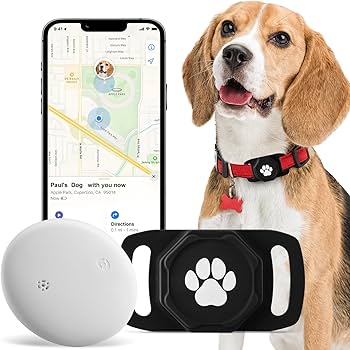
The Wagr Smart Pet Tracker focuses on a minimalist, lightweight architecture designed primarily for urban environments. Utilizing a 350mAh lithium-ion battery, the device achieves a modest 5 to 7 days of operational uptime under standard 15-minute GPS polling intervals. It leverages a dual GPS/GLONASS module combined with local GSM fallback. While its accelerometer-based activity tracking is standard, its primary engineering triumph is its 22-gram payload, making it unobtrusive for smaller breeds. The enclosure is IP67-rated, providing adequate protection against shallow immersion.
Tractive GPS Tracker for Dogs & Cats (2025 Revision)
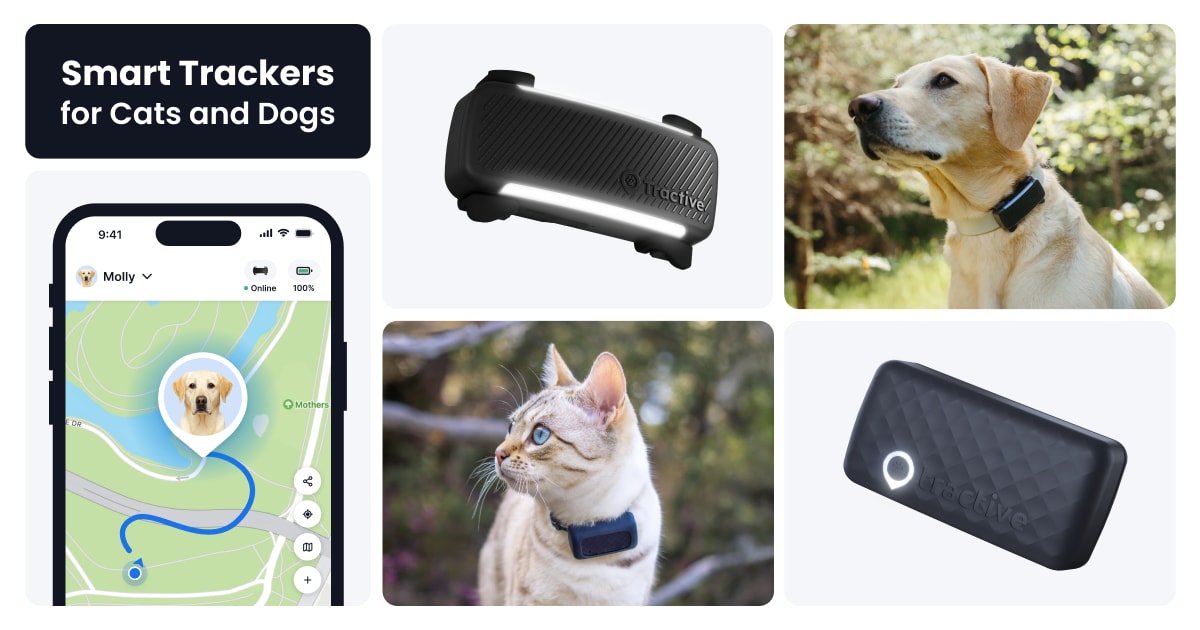
The 2025 Revision of the Tractive GPS Tracker iterates on its highly successful predecessor by upgrading its internal cellular modem to a global roaming LTE-M chip, significantly reducing latency in “Live Mode” (now updating every 2-3 seconds). Powered by a robust 500mAh cell, it delivers 10 to 14 days of battery life, extendable via “Power Saving Zones” (Wi-Fi geofencing) to a theoretical 30 days. The unit boasts an IPX7 water resistance rating and a proprietary 3-axis accelerometer array that parses sleep and activity data through on-board edge AI before cloud sync, reducing daily data packet transmission sizes by 40%.
Whistle GPS+ Health Smart Collar (2025 Model)
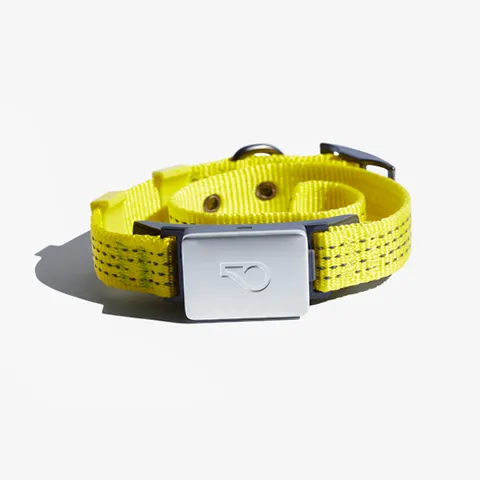
Whistle continues to bridge the gap between simple telemetry and veterinary diagnostics. The 2025 GPS+ Health Smart Collar is equipped with a high-fidelity sensor array that cross-references accelerometer and gyroscope data to detect specific micro-movements—quantifying scratching, licking, and drinking frequencies. Operating on AT&T’s LTE-M network in North America, the device extracts up to 15 days of runtime from its internal battery. The chassis is strictly IPX8-rated, surviving prolonged submersion up to 2 meters, making it highly suitable for sporting breeds and aquatic environments.
FitBark GPS 3 Smart Dog Tracker (Next-Gen 2025)

Engineering for absolute minimal weight, the FitBark GPS 3 clocks in at an astonishing 16 grams. Despite the micro-form factor, it houses a highly optimized Verizon LTE-M modem and a Bluetooth 5.3 LE module. Rather than relying entirely on cellular polling, the FitBark acts as a mesh node, piggybacking on authorized smartphone GPS data when in range to conserve its internal cell. This architecture yields up to 30 days of battery life per charge. The bone-shaped poly-carbonate shell is IP67-rated and integrates seamlessly with third-party human health apps (Apple Health, Fitbit) to synchronize inter-species step tracking.
Invoxia Pet Tracker 2 (2026 Edition)
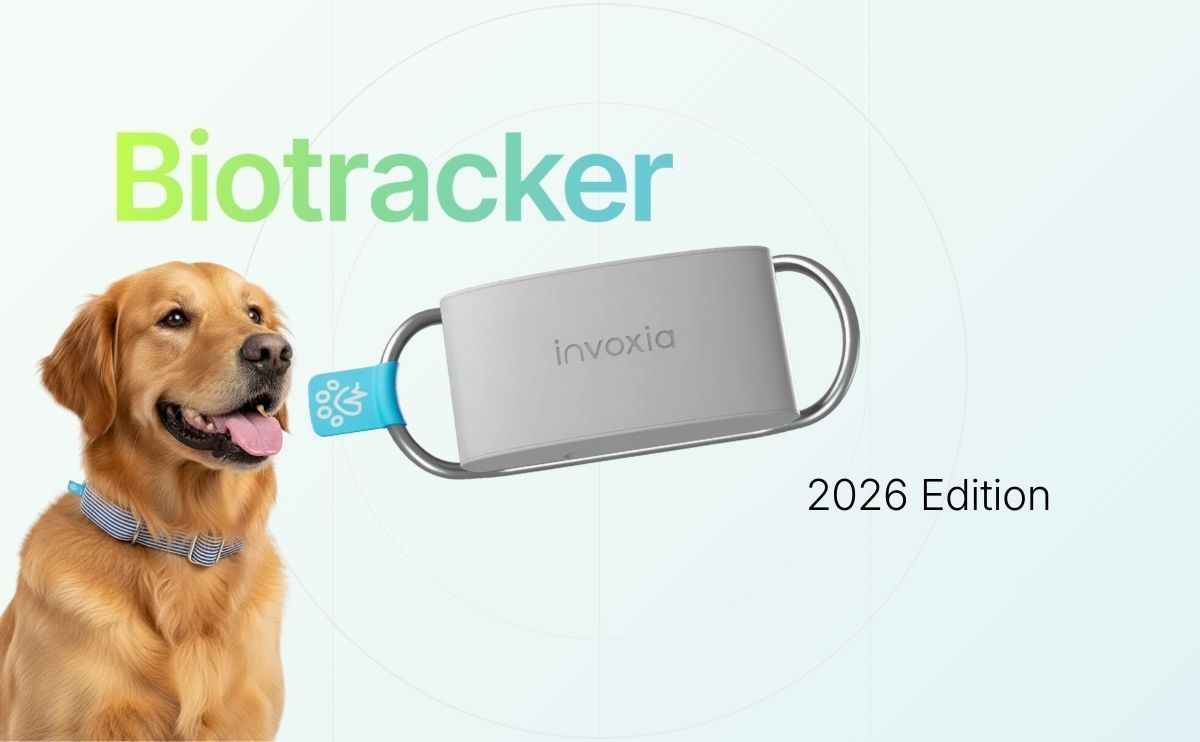
The Invoxia Pet Tracker 2 (2026 Edition) represents the highest echelon of biometric tracking. Moving away from legacy LoRa/Sigfox networks, the new model utilizes an ultra-low-power LTE-M connection. The standout hardware is its integrated miniaturized radar technology. By detecting micro-vibrations through the dog’s dermal layers, it actively tracks resting heart rate (RHR) and respiratory rate (RR) with clinical-grade accuracy. Thanks to extreme power gating and a high-density cell, the Invoxia can run an unprecedented 1 to 3 months on a single charge, dependent on polling aggressiveness.
Technical Comparison Table
| Specification | Wagr | Tractive (2025) | Whistle GPS+ (2025) | FitBark GPS 3 | Invoxia Pet Tracker 2 |
|---|---|---|---|---|---|
| Weight (g) | 22g | 35g | 27g | 16g | 30g |
| Connectivity Protocol | GSM / Wi-Fi | LTE-M / Wi-Fi | LTE-M (AT&T) | LTE-M (Verizon) / BT 5.3 | LTE-M |
| Est. Battery Runtime | 5-7 Days | 10-14 Days (up to 30w/ Wi-Fi) | 15 Days | Up to 30 Days | 1-3 Months |
| IP Ingress Rating | IP67 | IPX7 | IPX8 | IP67 | IP67 |
| Primary Sensor Array | 3-Axis Accelerometer | Acc. + Edge AI Sleep tracking | Acc. + Gyroscope (Lick/Scratch) | 3-Axis Accelerometer | Miniature Radar (RHR/RR) |
| Price / Purchase | Buy Now on Amazon | Buy Now on Amazon | Buy Now on Amazon | Buy Now on Amazon | Buy Now on Amazon |
Key Differentiators
- Best Sub-Metric: Battery Efficiency: The Invoxia Pet Tracker 2 easily takes the crown. By deploying ultra-low-power LTE-M and localized radar data compilation, it pushes update yields out to a staggering 1-3 months.
- Best Sub-Metric: Deep Biometric Telemetry: The Whistle GPS+ edges out competitors for behavioral health (licking, scratching), but the Invoxia stands alone in true cardiopulmonary monitoring (heart and respiratory rates).
- Best Sub-Metric: Weight & Footprint: The FitBark GPS 3 is structurally unmatched for toy breeds and cats, delivering robust 30-day performance in a chassis weighing just 16 grams.
The Verdict
For the average pet owner needing reliable, low-latency tracking, the Tractive GPS Tracker (2025 Revision) remains the superior all-around choice. Its combination of a global LTE-M modem, reliable IPX7 rating, and an excellent 2-3 second ping latency in Live Mode makes it highly dependable during escape scenarios.
However, if your purchase justification is rooted heavily in health diagnostics rather than simple locational fencing, the Invoxia Pet Tracker 2 (2026 Edition) represents a massive leap in veterinary-adjacent technology. Its radar-based resting heart rate tracking offers a level of preventative telemetry previously unavailable outside clinical settings. For owners of toy breeds where physical mass is the limiting factor, the 16-gram FitBark GPS 3 is the undisputed data-driven winner.